
Articles
How To Grow Garlic

Adapted from the Iowa State University Horticulture
How to Grow Garlic Using Sustainable Farming Practices:
Garlic (Allium sativum) is a member of the onion family (Alliaceae) along with onions, chives, shallots, leeks, and elephant garlic. Garlic is distinguished from other family members by its flat leaves and clove-like bulbs. Each garlic bulb contains several small scales or cloves enclosed in a white or purplish parchment-like sheath.
Cultivars
Garlic cultivars are classified as either hardneck or softneck.
Hardneck cultivars (Allium sativum var. ophioscorodon) produce a flower stalk (technically a scape) and are often termed “top-setting” or “bolting” cultivars. Flowers, if they are produced, usually abort. Bulbils (small bulblets) are produced on top of the scape. The flower stalks of some hardneck garlic are distinctly coiled. These types are referred to as rocambole or serpent garlic. Typically, hardneck garlic cultivars have 4 to 12 cloves surrounding the flower stalk. Because of the hard flower stalk, they are difficult to braid. Garlic Scapes are completely edible and considered a delicacy. Watch our recipes page for delicious ways to prepare garlic scapes.
Softneck cultivars (Allium sativum var. sativum) are sometimes referred to as “artichoke” cultivars and do not produce a seed stalk. These cultivars are commonly used in California for commercial production. However, some softneck cultivars are suitable for cold climates. Softneck cultivars are generally more productive than hardnecks because all the energy goes to producing a bulb rather than a bulb and flower stalk. Bulbs have 10 to 40 cloves arranged in layers. Softneck garlic tends to have a much longer shelf life than hardneck garlic and typically can be stored for 6 to 8 months without significant deterioration. They also are easy to braid.
Elephant, porcelain, or greathead garlic is actually a type of leek (Allium ampeloprasum). Elephant garlic is much larger than true garlic, often weighing as much as 1 pound per bulb. They also store well. The taste of elephant garlic is much milder than that of true garlic, but in cold climates it can develop a sharp or bitter taste.
Preparation of the Garlic Bulbs/Cloves
Open your garlic box the same day it is received! This will help prevent mold/mildew/rot, as it will allow the garlic to continue drying. Place the garlic in a cool location away from sunlight as you wait for the proper planting time.
Up to 2 days prior to planting (but not longer), “shuck” the garlic. Remove the outer husks and separate the cloves, leaving the skins on the individual cloves. Store the cloves in a cool location away from sunlight.
One helpful step to help avoid disease is to shuck your garlic away from your field/garden, so the dirt particles and shucks can not contaminate your soil. This may be an unnecessary precaution, but it’s an easy one to do. Therefore, we recommend shucking garlic away from your field/garden.
Dipping/soaking cloves: more to come here in the near future…
Planting
Planting Garlic: Garlic grows best in well-drained, fertile soils that are high in organic matter. Misshapen bulbs may result when garlic is grown in heavy, clay soils. Incorporating compost or well-rotted manure into heavy, clay soils can be beneficial. The optimum soil pH for garlic is between 6 and 7. Before planting, soils should be well tilled to provide a loose growing bed for bulb development. Because garlic plants do not produce true seeds, garlic is grown by planting cloves. Garlic cloves can be purchased at garden centers or from mail-order companies, though direct purchase online from growers is typically more economical.
Planting cloves from garlic purchased at the grocery store is not recommended because these are usually softneck cultivars that are mainly adapted to mild climates. Additionally, most grocery store garlic has been exposed to chemicals that postpone or prevent growth for longer shelf life.
Cloves should be planted in fall in most of the US (October to early November) or early spring (late March to early April). Spring-planted garlic will not likely achieve the same size as fall-planted garlic. Contact your local Extension Office or state Extension for information about planting times specific to your area.
Fall-planted garlic should be mulched with a 4- to 6-inch layer of weed-seed free straw to help prevent winter injury. In early spring, move the straw to between the rows to allow the garlic foliage to emerge and moisture to evaporate from the soil. The mulch helps control weeds during the growing season.
Late spring planting results in smaller bulbs at harvest.
Plant cloves with the pointed side up, root end down. When planted upside down, misshapen bulbs often develop. Plant cloves about 1 inch deep, or contact your Extension Office for recommended depth for your climate/zone.
Hardneck (top-setting) garlic cultivars also may also be grown from the bulbils or bulblets. Plant the bulblets in early spring and allow to grow in the same area for 18 months. By the end of the first season, the bulblets will form “rounds” or unsegmented bulbs. Left undisturbed, they will form a cluster of cloves by the following summer.
Spacing
Place cloves 3 to 5 inches apart within the row. Rows should be spaced 18 to 24 inches apart.
Fertilizing
We suggest that you contact your local agricultural extension office for recommendations specific to your growing area. A list of offices, by county, can be found here: http://www.clemson.edu/extension/county/https://www.clemson.edu/extension/ .
Garlic requires more fertilizer than many vegetables. Incorporate 1 to 2 pounds of an all-purpose garden fertilizer (10-10-10) per 100 square feet before planting. One month after planting apply an additional pound per 100 foot of row in a band 3 to 4 inches from the base of the plants. Avoid nitrogen applications after the first week of May because bulbing may be delayed. Soil tests should be taken before planting to determine phosphorus and potassium needs.
If you prefer to garden naturally, try fertilizing with blood meal, bone meal, and/or fish meal.
Maintenance
Water plants once per week during dry weather. Stop irrigating in late June to allow the foliage to yellow and die before harvest. Like an onion, garlic has a shallow root system. Weeds should be removed carefully to avoid disturbing or pulling up the garlic bulbs with the weeds. Mulches help control weeds and conserve soil moisture.
Potential Problems
Most garlic diseases are either soil- or set-borne and usually can be controlled with proper rotation and planting disease-free sets. Before planting, check each clove for signs of disease. Discard any infected cloves or bruised cloves because they may decay in the soil. Many garlic cultivars are susceptible to yellow tips.
The development of yellow tips early in the season (before bulbing) may drastically reduce yields. It is usually a sign of water stress, nutrient deficiency, or disease. Insects are not a major problem for garlic production, though a few destructive pests do exist.
Harvest and Storage
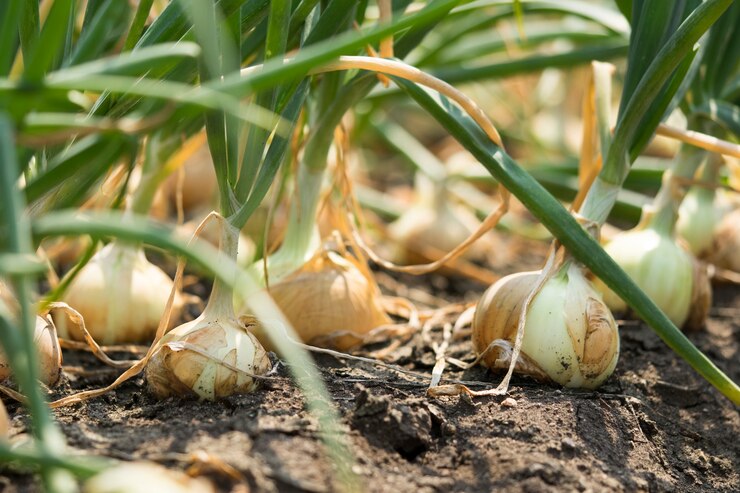
When is it best to harvest garlic? In late spring/early summer, the garlic begins to change from a green onion-looking plant to forming bulbs. The greatest part of the size develops in the last month before harvest.
Spring garlic looks similar to green onions. It has not yet begun to form cloves in mid/late April in Iowa. Spring garlic can be eaten, but of course won’t allow you to produce as large of a quantity as if it matures before harvest. Still, it is another unique way to enjoy your garlic!


Carefully dig garlic bulbs when the foliage starts to turn yellow and die, most often when half of the leaves are dying. Yellowing normally occurs between June and September (varying by climate/zone). Dry or cure the bulbs in a warm, well-ventilated, and shaded location for at least 2 to 3 weeks.
After drying, remove the foliage 1 inch above the bulbs or use the foliage to braid the bulbs together. Place the bulbs in a mesh bag or open crate and store where it is cool (32–40°F) and dry (65–70% relative humidity). Softneck types can be stored for 6 months or more, whereas hardneck types may only store for approximately 3-5 months. More about how to store garlic here.
For more information
If you have any questions, feel free to contact us!
Additional information also is available from these Web sites, and also your state’s Extension web site
All garlic seed for sale is supplied by our small micro farm in Elgin Oregon – Greifs Gourmet Garlic!

Picture this: you crack open an ice-cold soda can on a hot summer day, the refreshing fizz tantalizing your taste buds. But have you ever stopped to think about what happens to that can once you’re done? The environmental impact of soda cans goes far beyond quenching your thirst. Let’s delve into the world of soda cans, exploring their journey from production to disposal, and how our choices – recycling or landfilling – shape their impact on the planet.
Overview of Soda Cans
Soda cans, those shiny containers of bubbly goodness that we often take for granted. They are typically made of aluminum, a lightweight and durable metal that is perfect for packaging beverages. The design of soda cans has evolved over the years, from simple cylindrical shapes to sleek and modern designs that catch the eye on store shelves.
These cans come in various sizes, from standard 12-ounce options to larger 16-ounce varieties for those who can’t get enough fizz in one go. With vibrant graphics and logos adorning their exteriors, soda cans serve as miniature canvases for marketing campaigns and brand recognition.
The convenience of soda cans cannot be overlooked – they are portable, easy to open with a satisfying ‘pop,’ and recyclable after use. Whether you prefer classic cola or fruity flavors, there’s a soda can out there waiting to quench your thirst with its effervescent contents.
Environmental Impact of Soda Cans
Soda cans have a significant environmental impact that often goes unnoticed. From production to disposal, these ubiquitous containers leave a lasting mark on the planet. The manufacturing process of soda cans involves extracting raw materials like aluminum ore, which can contribute to deforestation and habitat destruction.
Furthermore, the energy-intensive process of smelting and shaping aluminum into cans releases harmful greenhouse gases into the atmosphere, exacerbating climate change. Once consumed, many soda cans end up in landfills where they take hundreds of years to decompose fully. This leads to soil pollution and potential harm to wildlife.
By understanding the environmental implications of soda cans, we can make more informed choices about our consumption habits. Recycling is one effective way to mitigate the impact of soda cans on the environment. By recycling aluminum, we save energy and resources while reducing waste sent to landfills.
Recycling of Soda Cans
When it comes to the environmental impact of soda cans, recycling plays a pivotal role in reducing waste and conserving resources. Recycling a single aluminum can saves enough energy to power a TV for three hours – that’s pretty impressive!
The process of recycling soda cans involves collecting used cans, melting them down, and then reshaping them into new products. This cycle significantly reduces the need for raw materials and cuts down on greenhouse gas emissions associated with mining and manufacturing new aluminum.
By choosing to recycle your soda cans instead of tossing them in the trash, you are contributing to a more sustainable future. Plus, recycled aluminum retains its properties indefinitely, making it an endlessly recyclable material. So next time you finish that fizzy drink, remember to toss the can in the recycling bin – every little bit helps!
Landfill Impact of Soda Cans
When sodacans end up in landfills, they pose a significant environmental threat. These aluminum containers take hundreds of years to decompose, releasing harmful chemicals into the soil and water.
As sodacans break down over time, they can contaminate groundwater sources with toxic substances that are detrimental to human health and wildlife. The presence of these pollutants can disrupt ecosystems and have long-lasting effects on the environment.
Moreover, the energy required to produce new aluminum cans from raw materials is substantially higher than recycling existing ones. By sending sodacans to landfills instead of recycling them, we are contributing to increased energy consumption and greenhouse gas emissions.
Proper recycling of sodacans helps conserve resources, reduce pollution levels, and lessen our carbon footprint. It’s essential to divert these recyclable materials from landfills by incorporating sustainable waste management practices into our daily routines.
Conclusion
As we wrap up our exploration of the environmental impact of sodacans, it’s evident that these ubiquitous containers have a significant footprint on our planet. From production to disposal, sodacans play a role in the larger conversation about sustainability and waste management.
Recycling offers a promising solution to mitigate the harmful effects of discarded sodacans. By reusing materials and reducing the demand for new resources, recycling can help conserve energy and lower greenhouse gas emissions.
On the other hand, when sodacans end up in landfills, they contribute to pollution and take up valuable space. Proper disposal methods are crucial in minimizing the negative consequences on our environment.
The choices we make regarding how we handle sodacans can have far-reaching implications for our planet. It’s important to consider the environmental impact of our actions and strive towards more sustainable practices in all aspects of life.
FAQs
Are sodacans recyclable?
Yes, sodacans are highly recyclable. In fact, aluminum is one of the most recycled materials in the world.
How many times can a soda can be recycled?
Aluminum cans can be recycled indefinitely without losing quality. This means that a soda can you recycle today could be back on store shelves as a new can in as little as 60 days.
What happens if I throw away a soda can instead of recycling it?
When you throw away a soda can, it ends up in landfills where it takes hundreds of years to decompose and may leach harmful chemicals into the soil and water.
By choosing to recycle your sodacans instead of sending them to the landfill, you are not only conserving valuable resources but also reducing pollution and energy consumption associated with producing new aluminum products. Make sure to always recycle your empty sodacans to help protect our environment for future generations.
Welcome to the enchanting world of DiamondFairyBunny, where whimsy and wonder collide to create a magical realm of beauty and power. If you’re ready to unlock the secrets of this mystical domain and discover the true value of citrine gemstones, then join us on a journey like no other. From exploring the allure of peridot compared to other green gemstones, such as emerald, to mastering gemmology basics for smarter purchases, we’ve got all the insights you need to dive into the spellbinding universe of precious gems. So buckle up and get ready for an adventure that will dazzle your senses and ignite your passion for all things sparkling!
DiamondFairyBunny
Step into the realm of DiamondFairyBunny, where every gem tells a story and every piece sparkles with magic. This whimsical world is a treasure trove of beauty and elegance, where dreams come to life in shimmering hues of brilliance. The allure of DiamondFairyBunny lies in its ability to transport you to a land filled with wonder and enchantment, where each gemstone holds a unique power waiting to be unlocked.
From the dazzling citrine gemstones that radiate warmth and positivity to the captivating peridot gems that exude freshness and vitality, DiamondFairyBunny offers a kaleidoscope of colors and energies for every discerning connoisseur. Whether you’re drawn to the vibrant green hues of peridot or the sunny glow of citrine, there’s something truly special about adorning yourself with these precious treasures from DiamondFairyBunny.
In this magical realm, each gemstone is more than just a piece of jewelry – it’s a symbol of inner strength, beauty, and grace. Let DiamondFairyBunny be your guide as you navigate through this wondrous world of whimsy and wonder.
The Magic of Diamondfairybunny A Comprehensive Guide to Unlocking Its Beauty and Power
Welcome to the enchanting world of DiamondFairyBunny, where magic and beauty converge in a symphony of whimsy and wonder. This mystical gemstone holds within it a power that transcends ordinary perception, beckoning you into a realm of infinite possibilities.
DiamondFairyBunny is not just a stone; it is a key to unlocking your innermost desires and dreams. Its ethereal essence resonates with the deepest parts of your soul, stirring emotions you never knew existed. As you gaze upon its shimmering facets, you can feel its energy pulsating through every fiber of your being.
This comprehensive guide delves deep into the mysteries of DiamondFairyBunny, revealing secrets that have been hidden for centuries. From its origins in ancient folklore to its modern-day allure, this gemstone has captivated hearts and minds across generations.
Prepare to embark on a journey unlike any other as we explore the beauty and power that lie within DiamondFairyBunny. Open your mind to endless possibilities and let yourself be swept away by the magic that awaits.
Unveiling the True citrine gemstone value: A Professional Guide
Are you curious about the true value of citrine gemstones? Let’s dive into this golden-hued beauty and uncover its hidden treasures.
Citrine, with its warm yellow tones reminiscent of sunshine, is often associated with positivity and abundance. This radiant gemstone is believed to carry the energy of the sun, bringing joy and prosperity to those who wear it.
In terms of value, citrine is highly sought after for its affordability compared to other gemstones like diamonds or sapphires. Despite being more accessible in price, citrine’s vibrant color and sparkling clarity make it a popular choice for jewelry lovers around the world.
When evaluating the worth of a citrine gemstone, factors such as color intensity, clarity, cut quality, and carat weight play a crucial role. A deep golden hue with minimal imperfections can significantly increase the value of a citrine stone.
Whether you’re drawn to citrine for its metaphysical properties or simply love its sunny aesthetic, understanding the true value of this enchanting gem can help you make informed decisions when adding it to your collection.
How Does Peridot Compare To Other Green Gemstones, Such as Emerald, In Terms of Value and Rarity?
When it comes to green gemstones, peridot and emerald stand out as popular choices amongst jewelry enthusiasts. While both boast stunning green hues, they differ in terms of value and rarity.
Peridot, with its vibrant lime-green color, is known for its affordability compared to emerald. This makes it a great option for those seeking a beautiful green gemstone without breaking the bank.
On the other hand, emerald is prized for its deep green color and rarity, making it one of the most valuable gemstones in the world. Its rich history and association with royalty add to its allure and desirability among collectors.
While peridot may be more accessible in terms of price, emerald’s rarity and prestige make it a coveted choice for those looking to make a statement with their jewelry collection.
Gemmology Basics for Better Gemstones & Jewellery Purchase
Are you a gemstone enthusiast looking to make informed decisions when purchasing gemstones and jewellery? Understanding some gemmology basics can be the key to unlocking a world of beauty and value.
Familiarize yourself with the 4 Cs – cut, color, clarity, and carat weight – when evaluating gemstones. The cut determines how well it reflects light, while color intensity can significantly impact its overall appeal. Clarity refers to any imperfections within the stone that may affect its brilliance.
Furthermore, knowing about different types of treatments and enhancements commonly used in the industry will help you determine the authenticity and quality of a gemstone. From heat treatments to irradiation processes, these techniques can alter a gem’s appearance and value.
Educate yourself on popular gemstone varieties like diamonds, sapphires, rubies, emeralds, etc., their characteristics, origins, and rarity factors. This knowledge will empower you to make more informed choices when adding new pieces to your collection or investing in precious gems for future generations.
5 Tips For Choosing A Gemstone
When it comes to choosing a gemstone, here are five tips to keep in mind:
1. Consider the 4 Cs: Cut, Color, Clarity, and Carat weight. The cut determines how well the gem sparkles, while color should be vibrant and appealing. Clarity refers to any imperfections within the stone, and carat weight relates to its size.
2. Think about your budget. Gemstones come in a wide range of prices, so set a budget before starting your search.
3. Research the different types of gemstones available. Each one has unique properties and values that may appeal to you differently.
4. Buy from reputable sources or jewelers who provide certification for their gemstones’ authenticity and quality.
5. Trust your instincts! Choose a gemstone that speaks to you personally and makes you feel connected to its beauty and energy.
Chaturbate
Let’s dive into the world of Chaturbate, a platform that brings together entertainment and connection like never before. With a diverse range of performers showcasing their talents live, there is something for everyone on Chaturbate.
From solo performances to couples, groups, and even unique fetishes, Chaturbate offers a plethora of options to cater to all preferences. The interactive nature of the platform allows viewers to engage with performers in real-time through chats and tips, adding an exciting element to the experience.
Whether you’re looking for a steamy show or simply want to explore different forms of expression and artistry, Chaturbate opens up a world of possibilities. It’s not just about adult content; it’s about embracing individuality and celebrating self-expression in all its forms.
So if you’re curious or seeking some entertainment that goes beyond the conventional, why not take a peek into what Chaturbate has to offer? Who knows, you might just discover something unexpected and exhilarating along the way.
MyFreeCams
Have you ever explored the world of online live cams? MyFreeCams is a popular platform where users can interact with models in real-time. It offers a unique and immersive experience for those seeking entertainment or companionship from the comfort of their own home.
MyFreeCams provides a diverse selection of models, catering to a wide range of preferences and interests. Whether you’re looking for a casual chat or something more intimate, there’s someone on MyFreeCams for everyone.
One of the appealing aspects of MyFreeCams is its interactive nature. Users have the opportunity to engage with models through live chats, tipping options, and private shows. This level of interaction creates a personalized experience that sets it apart from other platforms.
With its user-friendly interface and variety of features, MyFreeCams continues to be a go-to destination for those interested in exploring the world of live cams. So if you’re curious about delving into this realm, MyFreeCams might just be the place to start your journey towards new experiences and connections.
Conclusion
In the enchanting world of gemstones and jewelry, DiamondFairyBunny stands out as a gateway to a wonderland of whimsy and wonder. With its stunning collection of citrine gemstones, peridots, and other precious gems, DiamondFairyBunny offers not just beauty but also power and value.
By delving into the true citrine gemstone value and comparing peridot with other green gemstones like emerald in terms of rarity and worth, we have uncovered the magic that lies within these treasures of the earth. Understanding gemmology basics can help you make informed decisions when purchasing gemstones or jewelry pieces.
Whether you are looking for tips on choosing the perfect gemstone or exploring platforms like Chaturbate or MyFreeCams for unique designs, DiamondFairyBunny is your go-to guide for all things sparkly and spectacular. Embrace the allure of these precious stones and let them add a touch of glamour to your life.
Step into the world of DiamondFairyBunny, where every piece tells a story waiting to be discovered. Let your imagination soar as you explore this realm of elegance and sophistication. Unleash your inner fairy bunny spirit as you adorn yourself with these breathtaking creations that captivate hearts and minds alike.

Step into the captivating world of Jessica Palacios, where talent meets passion in a symphony of success. Get ready to uncover the inspiring journey of a remarkable individual who has left an indelible mark on the realms of career and creativity. Join us as we delve deep into the life and accomplishments of Jessica Palacios, a name that resonates with excellence and innovation.
Overview of Jessica Palacios
Jessica Palacios, a rising star in the world of digital influencers and content creators, has captured the hearts of many with her vibrant personality and authentic approach to sharing her life online. Through her various platforms, Jessica offers a glimpse into her daily adventures, fashion choices, and beauty tips.
With a keen eye for style and aesthetics, Jessica’s content stands out for its creativity and originality. Her engaging videos and stunning photography have garnered a loyal following that continues to grow each day. Whether she’s showcasing the latest trends or sharing personal anecdotes, Jessica’s genuine charm shines through in everything she does.
Known for her impeccable sense of fashion and beauty expertise, Jessica is not afraid to experiment with different looks and styles. From chic streetwear ensembles to glamorous red carpet outfits, she effortlessly pulls off every look with confidence and flair.
Stay tuned as we delve deeper into the fascinating journey of Jessica Palacios – from her humble beginnings to becoming a prominent figure in the influencer industry.
Early Life and Education
Jessica Palacios, a rising star in the fashion industry, had a humble beginning that shaped her journey to success. Growing up in a close-knit community, she discovered her passion for design at an early age.
Her curiosity and creativity led her to pursue a degree in Fashion Design at a prestigious university. Immersing herself in various courses and hands-on projects, Jessica honed her skills and developed her unique style.
Despite facing challenges along the way, Jessica remained determined and focused on achieving her dreams. She balanced academic responsibilities with extracurricular activities, gaining valuable experiences that would later contribute to her professional growth.
Through dedication and hard work, Jessica graduated with honors and embarked on a promising career in the fashion industry. Her early life experiences continue to inspire others as she strives for excellence in all aspects of her work.
Background of Jessica Palacios
Jessica Palacios has a diverse background that has shaped her into the successful individual she is today. Growing up in a multicultural environment, Jessica developed a deep appreciation for diversity and inclusion. This upbringing instilled in her the values of empathy and understanding towards different perspectives.
Her passion for education led her to pursue degrees in both psychology and business administration, showcasing her commitment to personal growth and development. With a strong foundation in these fields, Jessica embarked on a journey filled with opportunities to learn and grow professionally.
Through various experiences in the corporate world, Jessica honed her skills in leadership, communication, and problem-solving. These experiences have been instrumental in shaping her career trajectory and establishing herself as an influential figure within her industry.
Jessica’s background reflects resilience, determination, and a relentless drive to succeed – qualities that continue to propel her forward on her path towards even greater accomplishments.
Educational Journey
Jessica Palacios embarked on her educational journey with determination and a thirst for knowledge. She pursued higher education at renowned institutions, always striving to excel in her academic pursuits. With a strong work ethic and passion for learning, Jessica immersed herself in various subjects that captured her interest.
Throughout her educational endeavors, Jessica actively engaged in extracurricular activities, broadening her horizons beyond the classroom. She embraced challenges and sought opportunities to expand her skill set while connecting with like-minded individuals who shared her enthusiasm for personal growth.
From attending lectures to participating in workshops and seminars, Jessica’s educational journey was filled with enriching experiences that shaped her into the accomplished professional she is today. Her commitment to continuous learning and self-improvement serves as an inspiration to those around her, highlighting the importance of lifelong education in achieving one’s goals.
Career Development
Embarking on her career journey, Jessica Palacios demonstrated a strong drive for growth and development. She navigated through various industries, gaining valuable experience along the way. Each opportunity allowed her to refine her skills and expand her knowledge base.
Jessica’s career development was marked by a series of strategic moves that propelled her forward in achieving her professional goals. From entry-level positions to leadership roles, she embraced challenges head-on and continuously sought ways to enhance her expertise.
Through consistent learning and adaptation, Jessica honed a versatile skill set that made her stand out in the competitive landscape of today’s job market. Her commitment to personal growth and advancement served as a driving force behind each career milestone she achieved.
As she continues to evolve professionally, Jessica remains dedicated to seizing new opportunities for learning and advancement within her chosen field.
Professional Experiences
Jessica Palacios has had a diverse range of professional experiences that have shaped her career journey. From starting as an intern at a local marketing agency to landing key roles in leading companies, Jessica’s dedication and hard work have been evident throughout her career.
Her time working in various industries has given her a well-rounded perspective on different business operations and strategies. With each new role, she has continued to expand her skills and knowledge, positioning herself as a versatile professional capable of adapting to different challenges.
Through facing obstacles head-on and seizing opportunities for growth, Jessica has honed her problem-solving abilities and decision-making skills. Her commitment to excellence and continuous learning is reflected in the successful projects she has led and the positive impact she has made within organizations.
Achievements and Milestones
Jessica Palacios has seen her fair share of achievements and milestones throughout her career. From landing key roles in major projects to receiving accolades for her outstanding work, she has undoubtedly made a mark in the industry.
One of her notable accomplishments includes being recognized as a rising star in the field, garnering attention for her exceptional talent and dedication. Her ability to consistently deliver high-quality results has not gone unnoticed, earning her respect among peers and industry professionals alike.
Moreover, Jessica’s commitment to pushing boundaries and exploring new opportunities has led to significant milestones in her journey. Whether it’s breaking into new markets or taking on challenging roles, she continues to push herself beyond limits.
With each milestone reached, Jessica Palacios sets the bar higher for herself, constantly striving for excellence in everything she does. Her unwavering determination and passion serve as an inspiration to many aspiring individuals looking to make their mark in the industry.
Social Media Presence
In the realm of social media, Jessica Palacios shines brightly with her engaging presence. Her online platforms serve as a window into her world, offering glimpses of both professional endeavors and personal moments. With a dedicated following, Jessica effectively connects with her audience through authentic content and meaningful interactions.
From sharing insights on career growth to showcasing snippets of daily life, Jessica’s social media channels are a reflection of her multifaceted personality. She leverages these platforms not only to inspire others but also to foster a sense of community among her followers.
Through curated posts and captivating visuals, Jessica Palacios cultivates an online space that is both informative and entertaining. Whether discussing industry trends or highlighting travel adventures, she navigates the digital landscape with grace and authenticity.
As she continues to expand her digital footprint, Jessica remains committed to using social media as a tool for empowerment and inspiration. Her genuine approach resonates with audiences around the globe, making her an influential figure in the online sphere.
Influence and Impact
When it comes to influence and impact, Jessica Palacios is a shining example of how one individual can make a difference in the world. Through her work and presence online, she has inspired countless individuals to pursue their passions and strive for success.
With her positive attitude and dedication to personal growth, Jessica serves as a role model for many looking to carve out their path in life. Her authenticity shines through in everything she does, resonating with audiences on a deep level.
By sharing her journey and experiences openly, Jessica has created a supportive community where others feel encouraged to chase their dreams fearlessly. Whether it’s through motivational posts or engaging content, she leaves a lasting impression on those who follow her.
Jessica’s influence extends beyond just social media; she actively participates in philanthropic endeavors that aim to give back to the community. Her commitment to making the world a better place showcases the true impact one person can have when they put their mind to it.
Brand Collaborations
Brand Collaborations are a vital part of Jessica Palacios’s career. With her unique style and strong online presence, she has successfully partnered with various brands across different industries. From fashion labels to beauty companies, Jessica’s collaborations have always been authentic and well-received by her followers.
These brand partnerships not only showcase her personal style but also reflect the values she stands for. By aligning herself with brands that resonate with her audience, Jessica has created a seamless integration between her content and sponsored posts.
Through these collaborations, Jessica has been able to expand her reach and connect with new audiences who share similar interests. Her ability to seamlessly blend promotional content with organic posts is what sets her apart in the influencer industry.
Brand collaborations have played a significant role in shaping Jessica Palacios’s career and establishing her as a trusted influencer in the digital space.
Interests and Hobbies
Jessica Palacios has a diverse range of interests and hobbies that reflect her vibrant personality. In her free time, she enjoys exploring new hiking trails, immersing herself in nature’s beauty while staying active and healthy. Jessica also has a passion for photography, capturing moments that inspire her creative side.
When it comes to unwinding, you can find her curled up with a good book or trying out new recipes in the kitchen. Cooking is not just a task for Jessica; it’s a therapeutic experience that allows her to express herself through flavors and ingredients.
Traveling is another one of Jessica’s passions, as she loves to immerse herself in different cultures and cuisines around the world. Whether it’s sampling street food in bustling markets or relaxing on pristine beaches, she always seeks new adventures to broaden her horizons.
Conclusion
Jessica Palacios stands out as a remarkable individual who has made significant strides in her career and personal branding. Her dedication to continuous learning and professional growth is evident through her achievements and collaborations. With a strong social media presence, she has been able to influence and impact others positively. Jessica’s diverse interests and hobbies add depth to her personality, making her an inspiration for many. As she continues on her journey, we can expect even greater things from this talented individual. Keep an eye out for what the future holds for Jessica Palacios!
-
 Articles4 weeks ago
How Many Times Can You Regrow Green Onions
-

 Articles4 weeks ago
Garlic and Garlic Scape Recipes
-
 Articles4 weeks ago
WHAT IS THE DIFFERENCE BETWEEN SEED GARLIC AND FOOD GARLIC?
-
 Articles4 weeks ago
HOW TO CHOOSE YOUR FAVORITE GARLIC VARIETIES?
-

 Articles4 weeks ago
WHAT IS THE BEST POTTING SOIL FOR HERBS?
-

 ABOUT GARLIC4 weeks ago
Elephant Garlic
-

 Articles3 weeks ago
Discover Culinary Adventures of Intrepidfood.eu: A Foodie’s Dream
-

 Articles4 weeks ago
HOW TO GROW AN HERB GARDEN?